
3 Rules to Survive in Trading: Position Size, Exit Plan and a Daily Journal
By Investingg.in
The short answer
Three rules do most of the protecting: risk only a small, fixed part of your capital on each trade (for example 1%), write your stop-loss and target down before you enter, and journal every trade the same day. None of them predicts the market. They control what you can: your risk, your exits and your records.
Watch the video
Rule 1: Decide the loss first, then the position size
Most traders pick the number of shares first and only then think about what they could lose. Reverse it. Decide the rupee loss you can accept on this trade, then let that number set the size.
The formula is: shares = rupee risk ÷ (entry price − stop-loss price). Worked example: with ₹1,00,000 of trading capital and a 1% risk rule, you accept a loss of ₹1,000 on the trade. If you buy at ₹200 with a stop-loss at ₹190, the risk per share is ₹10, so you buy 100 shares. If the stop-loss is hit, you lose about ₹1,000 (before costs and slippage), which is 1% of capital.
The example is only arithmetic. The right percentage depends on your capital, experience and risk tolerance, and nothing here is personal advice.
Rule 2: Write your exit before you enter
Before you click buy, write down the stop-loss and the target. A simple fixed plan is a stop 2% below the entry and a target 2% above it. Then leave the trade alone.
A stop-loss order does not guarantee an exit at your price, especially when a stock gaps or trading is halted. Costs also matter: with a 1-to-1 exit, brokerage, taxes and slippage mean you need to win a little more than half your trades just to break even.
Rule 3: Journal every trade, every day
What you record, you can understand, and what you understand, you can improve. A journal shows the patterns you cannot see in the moment: the time of day you overtrade, the setup you keep forcing, the emotion behind a bad entry.
- Write the plan before the trade: entry, stop-loss, target, size.
- After the trade, note what you did and how you felt.
- Review the numbers weekly, and change only one rule at a time.
What about a really bad day?
Set circuit breakers in advance, while you are calm. One common set: stop for the day after a loss of 2% of capital, stop for the week after 5%, and halve your position size if your account falls 10% from its peak. These are examples to adapt, not rules that suit everyone.
After any loss, take a short reset before the next trade: stop, move, write down what happened, then check your plan. A loss is a cost of business. A revenge trade is a choice.
Frequently asked questions
How much should I risk per trade?
Many educators suggest a small, fixed fraction of trading capital, often 1% to 2%, so that a run of losses leaves you able to continue. It is a general guideline, not personal advice.
How do I calculate position size?
Divide the rupee amount you are willing to lose by the gap between your entry price and your stop-loss price. For a ₹1,000 risk with an entry of ₹200 and a stop-loss of ₹190, that is ₹1,000 ÷ ₹10 = 100 shares.
Is a stop-loss guaranteed to limit my loss?
No. If a stock gaps past your stop-loss or trading is halted, the exit can happen at a worse price than planned.
Why keep a trade journal?
It shows your real win rate and habits, including the emotions behind mistakes, so you can improve based on records instead of memory.
Size every trade by the loss you can afford. Decide your exit before you enter. Journal every day. No single trade is worth breaking a rule for.
The ebook
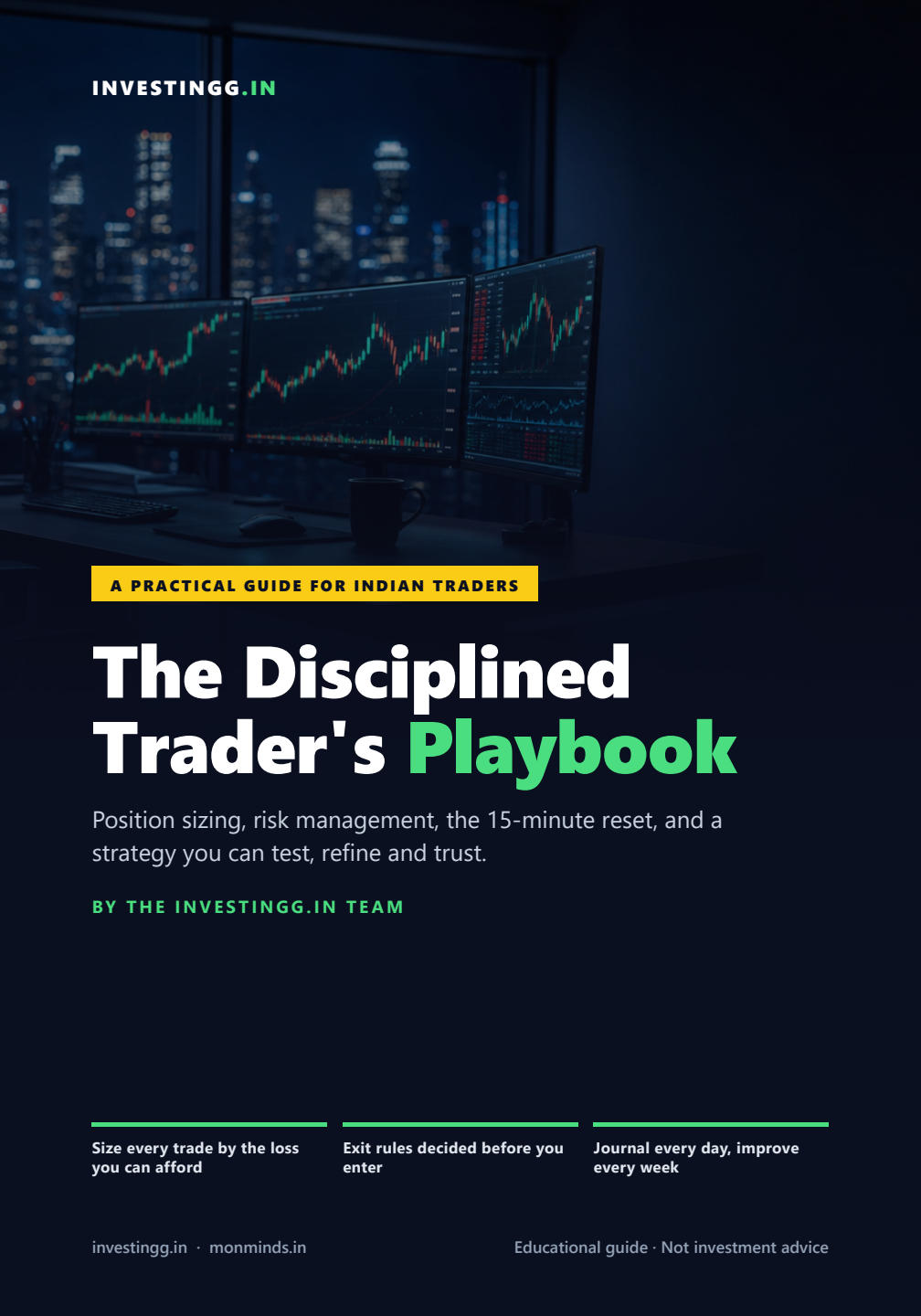
The Disciplined Trader's Playbook
By Deb Kumar Ghosal · 74 pages · ₹99
See what is inside →
Knowing is half the game
Turn discipline into a repeatable process
Journal every trade, see your real win rate and profit factor, and get discipline feedback that tells you when you're slipping — free on investingg.in.
More from the blog
Disclaimer: This content is for educational purposes only and should not be considered investment or trading advice. Trading involves risk of loss. Please consult your financial advisor before making investment decisions.